
Since 2009, sqlReports has given admins the ability to create custom reports that use SQL to get the data for the report, hence the name sqlReports. The current version is sqlReports 16, and it's available for free to anyone with an account on the site. Prior to sqlReports 16, there was a free version and a robust site subscription version, but as of sqlReports 16 that distinction is gone and everyone has free access to the robut version.
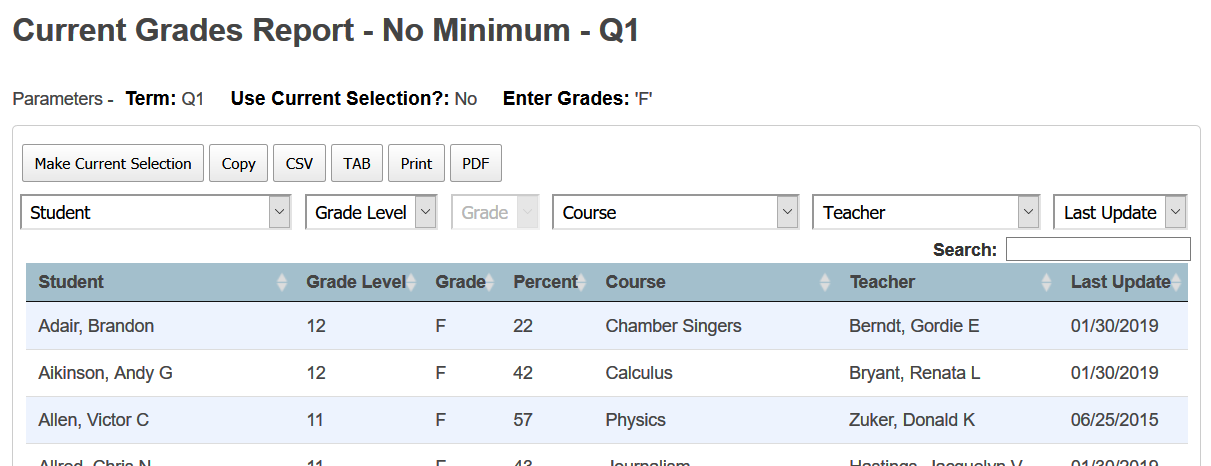
Below is an example of the output of a report created in sqlReports, followed by a breakdown of the various parts of sqlReports and the differences between the free version and the subscription version:
sqlReports Home Page
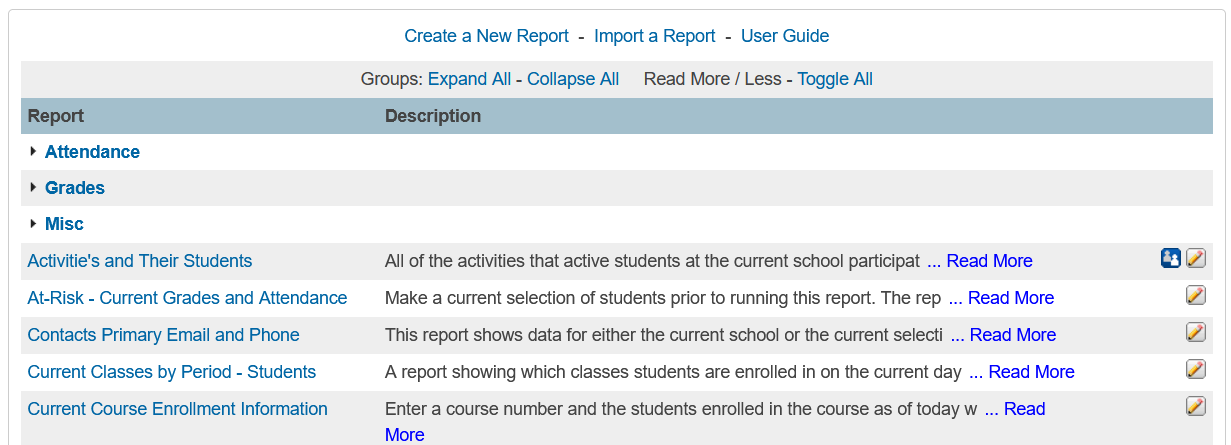
The sqlReports Home Page acts as a central location for your reports. It's easy to create new reports, edit reports, and import reports. Links are created automatically on the home page for your reports, and reports can be grouped together or appear without a group reference.
The SQL Behind the Report
The power of sqlReports is the ability to create reports based on Structured Query Language (SQL). Below is an example of the SQL query from a report setup (this is from the report that created the output above):
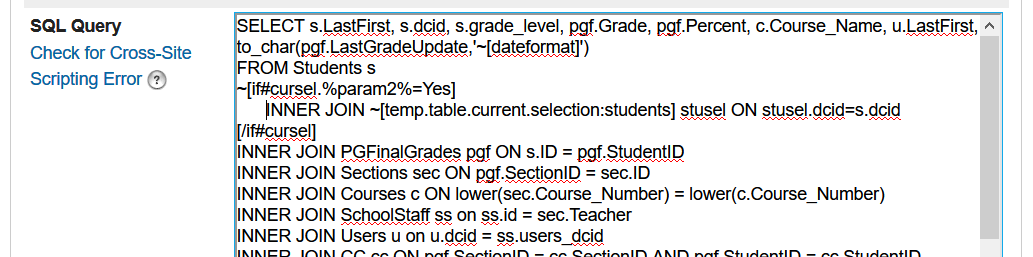
The is based on regular SQL, however, system variables such as ~(curschoolid) or user variables created by the report writer, can also be included.
Running the Report
Once the report is created, users visit the sqlReports home page and click on a link to the report. If there are any parameters created by the report writer, users will be prompted to enter that information. In the example below, the user is prompted to choose a grading term, choose whether or not to use the current selection of students, and is given a place to enter grades to use in the report. Parameters make the reports powerful and flexible - users can choose different parameters each time they run the report.
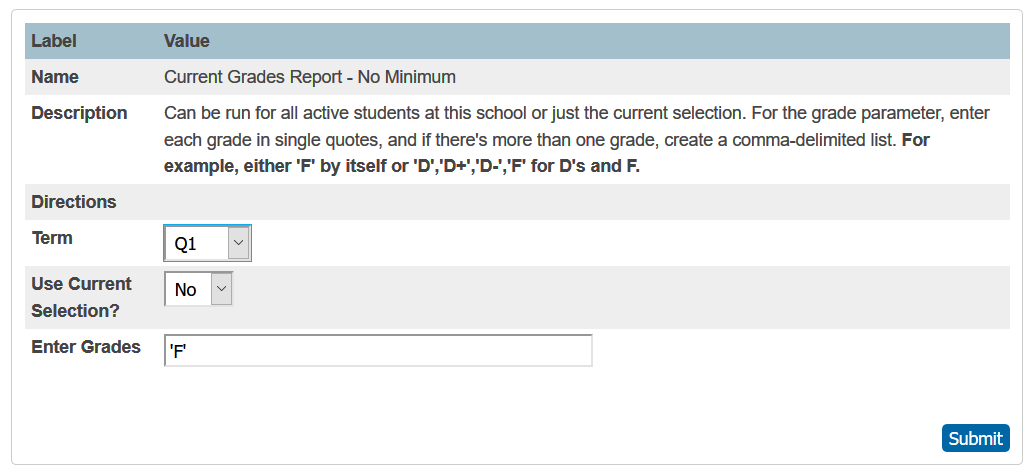
Once the user clicks on the Submit button, the report will run based on the SQL query and a page will come up displaying the results:
The user has the option to copy, export, or print the data. The subscription version of sqlReports allows users to filter results by column, and includes a button to click to make any students on the screen the current selection.
Advantages to Using sqlReports
- Powerful Report Builder - it's a powerful tool for those who wish to build their own reports. Users may wish to build their own reports because they find the built-in reports or custom reports from others lacking or too rigid.
- Ease-of-Use - there's only one plugin to install (a 2nd plugin must be installed if using the teacher portal version), it's easy to import existing reports, and it's easy to assign reports to specific user groups.
- Saves Time - one can create reports that replace everyday tasks, either for oneself or for others. For example, instead of searching DDE for the same information on a regular basis, one can create a report that retrieves the data and can be run by any user.
- Popularity - the customization has been available since 2009 and is used by hundreds of users. The large user base makes it easy to get help, espcially on the sqlReports User Group, and there's a good chance someone may already have a report you need or can provide you with the SQL necessary to create a report.
Free Edition vs Subscription Edition
The table below shows the main differences between the free version and the subscription version. As of sqlReports 16, the "sqlReports - Free Edition" version was discontinued, and anyone with an account on the site can download the "sqlReports" version for free:
| sqlReports - Free Edition | sqlReports |
|
| Pricing | Free. However, as of sqlReports 16, it was discontinued and the site subscription version was made available for free. | As of sqlReports 16, free to anyone with an account on this site. Prior versions are only available to those with a Site Subscription |
| Create, Import, Edit Reports | Yes | Yes |
| User Parameters | Up to 3 | Up to 8 |
| Make Current Selection Options | No | Yes |
| Assign Reports to Specific Groups (Run Access) | Yes | Yes |
| Header / Footer Options | No | Yes |
| Results Page | Handful of Options | All Options |
| Other sqlReports Features | None | Saved Params version of sqlReports, Teacher Portal Version of sqlReports, sqlCharts |
Frequently Asked Questions
You must login to this site. Once one is logged into the site, a resources menu with a link to a downloads page will appear.
Yes - sqlReports will work on hosted or self-hosted servers.
No - the install only adds the sqlReports customization itself. One will need to create a new report or use the import feature to import a report in order to add reports to sqlReports.
No - any report created in an earlier version will show up automatically in a newer versions of sqlReports. If for some reason one doesn't see all of the reports after an upgrade, consult the troubleshooting section of the installation guide for possible solutions.
Make sure the version of sqlReports is compatible with the version of SIS one is running (see the compatibility chart on the Knowledgebase page). The error can also happen on any version of sqlReports due to improper HTML anywhere in the sqlReports report.
No - that is an unauthorized version of sqlReports. The company that created it violated the terms of use by poaching and integrating a version of sqlReports into their customization without permission. It should be removed from the server and replaced with a version from this site.
sqlReports - it was released by Dean Dahlvang in March 2009. It wasn't until 6 1/2 years later (December 2015) that the SIS makers decided to add a built-in SQL reporting tool based on Oracle APEX and called it Enterprise Reporting. Even though that tool is available, sqlReports is preferred by many users, mainly due to sqlReports ease of use and popularity.
| IMPORTANT: The plugins from this site do not authenticate into the SIS and do not exchange data with Freund Resources or any other vendor. According to the FAQ provided by PowerSchool, plugins that meet that criteria are not impacted by the timeframe of August 31, 2026. Please see this blog post for more information. |